Sovereign DataOps: Why You Need a Fractional CAIO, Not Another AI Project
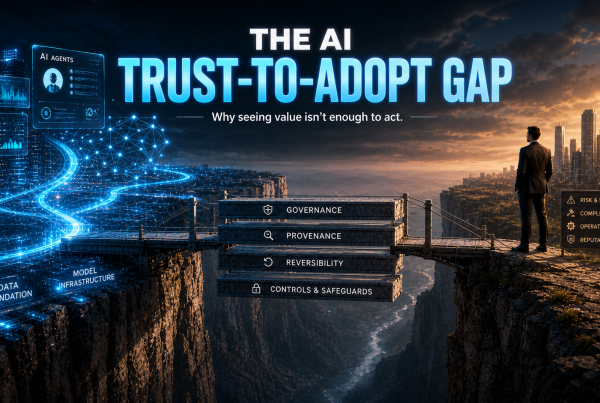
There is a quiet fiction at the heart of most AI roadmaps today. It shows up in slides that say “governance,” “trust,” and “responsible AI” as if those outcomes will emerge automatically once the right platforms are in place and the right consultants have been hired.
In reality, what most organizations are buying is capability at the edges: infrastructure from vendors, implementation from service partners, and point solutions from OEMs. All of that is necessary. None of it adds up, on its own, to an operating capability for AI‑enabled data and operations that is sovereign by design.
Very few organizations have a dedicated Chief AI Officer whose full‑time job is to build that capability. Most are improvising with a rotating cast of CIOs, CDOs, and external advisors. That improvisation is quickly becoming the single largest unpriced risk in AI adoption.
The gap is simple to state and hard to ignore: everyone is selling tools and projects. Almost nobody is accountable for the operating layer that decides what AI is actually allowed to do with your data, in your operations, with your workforce in the loop.
What a Fractional CAIO services stack actually does
Instead of telling you to go hire a full‑time CAIO, Vectored Value shows up as a Fractional CAIO stack: a layered set of services that starts with self‑managed diagnostics and scales into embedded operating leadership.
At a high level, that stack has three tiers.
Tier 1: Self‑managed readiness and risk diagnostics
The entry point is deliberately low‑friction. You don’t start with a six‑figure consulting engagement. You start with structured self‑diagnostics that reveal where your AI program is strong and where the real risks live.
Think of tools like the SoT AI‑IQ style assessments: short, targeted instruments that help you and your team see your current state across:
-
Data and decision sovereignty
-
Model and agent lifecycle safety
-
Workforce‑in‑the‑loop design
This tier is designed for executives who want to move beyond generic AI maturity scores and into a clear, sober picture of whether the operating foundations exist to support the AI they are already deploying.
You can run these diagnostics yourselves. The value comes from what happens next.
Tier 2: Fractional CAIO assessment and operating blueprint
Once you have a baseline, the next tier is a focused assessment led by a Fractional CAIO — not a generic project team.
The job at this stage is to answer three questions in your specific context:
-
Where is AI already influencing real decisions, actions, and safety in your data and operations?
-
What would “sovereign by design” look like for your organization, given your jurisdictions, regulators, customers, and workforce?
-
Which minimum set of operating patterns do you need in place over the next 6–12 months to move from “promising pilots” to “governed, repeatable outcomes”?
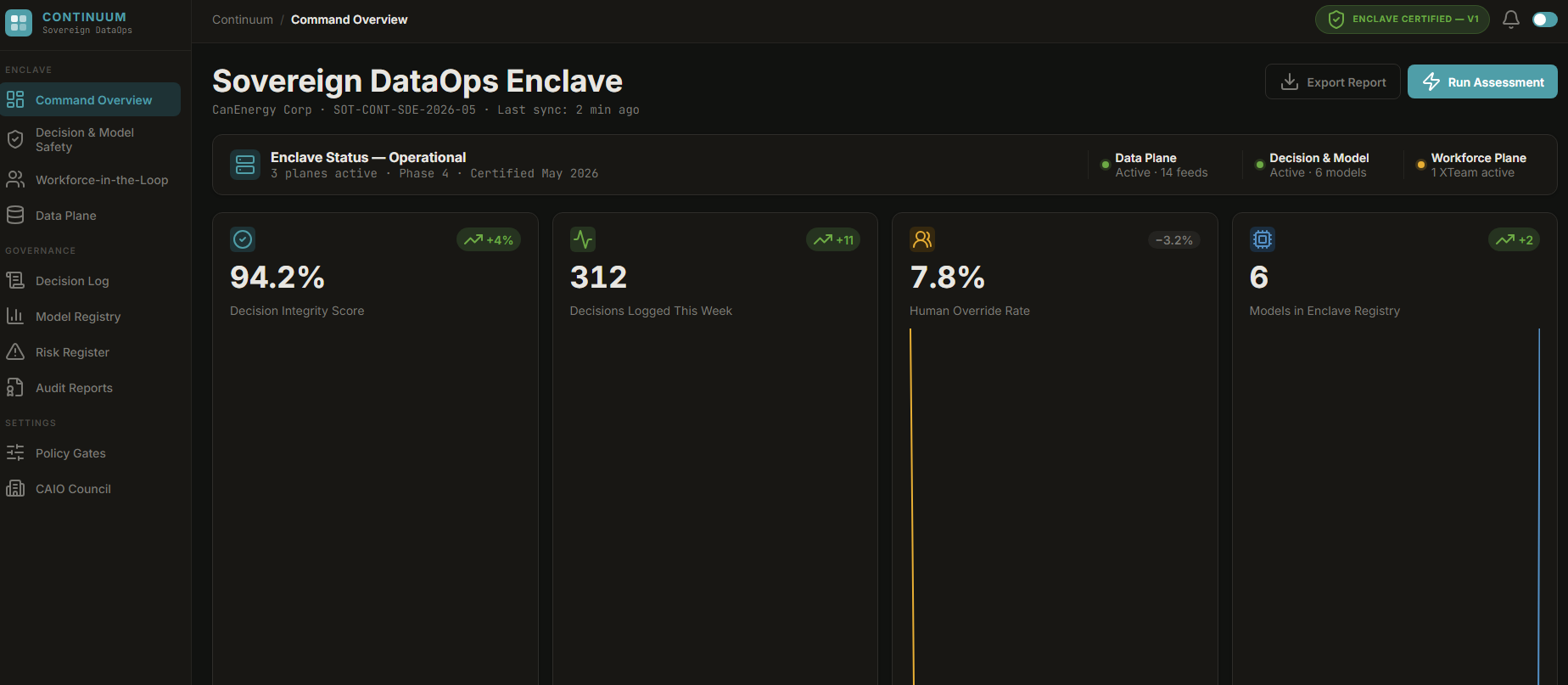
The output is not just a roadmap. It’s an operating blueprint: concrete patterns for how data should be governed, how AI‑assisted decisions should be logged and approved, how models and agents should be monitored and updated, and how human roles should be defined in critical workflows.
This is where you start to see the difference between another “AI strategy deck” and a Fractional CAIO function. The focus shifts from “what tools do we use?” to “how, exactly, are those tools allowed to operate here?”
Tier 3: Embedded operating leadership and configurable implementations
The top tier is where the Fractional CAIO stack becomes part of how you run the business, not just a project.
Here, Vectored Value acts like a standing member of your leadership team on AI‑enabled operations, with a clear remit:
-
Steward Sovereign DataOps
Ensure that data provenance, jurisdictional rules, and zones of trust are defined and enforced across systems, not just documented in policies. -
Govern Decision and Model Safety
Make decision‑loop integrity, model inventory, drift monitoring, and bounded autonomy part of the way your operations work — especially in safety‑critical or regulated domains. -
Design Workforce‑in‑the‑Loop roles and escalations
Define and maintain the human roles, X‑team patterns, and escalation routes that keep people in charge of what matters, instead of leaving them to rubber‑stamp opaque recommendations.
Underneath that leadership, you can switch on configurable implementation offerings. These are not off‑the‑shelf products; they are pre‑designed operating patterns that can be adapted quickly:
-
A “sovereign data operations” pattern for your analytics and reporting stack
-
A “safe autonomy envelope” pattern for models and agents that touch physical or financial systems
-
A “workforce‑in‑the‑loop” pattern for control rooms, field operations, or customer‑facing decision centers
In other words: you’re not buying another framework. You’re getting a reusable set of operating patterns that can be switched on across new workflows, sites, and partners without having to renegotiate the basics every time.
Where the CAIO Council fits — and why it stays adjacent
In parallel, the CAIO Council concept can sit adjacent to these services. Its job is to hold the neutral, standards‑aligned center of gravity across industry, OEM, academic, and government conversations.
That is a separate stream of activity: convening, research, doctrine, and sovereign design patterns that governments and alliances can adopt.
The Fractional CAIO services stack is how those patterns become real inside a specific organization or ecosystem without waiting for the job market — or the policy environment — to catch up.
You don’t have to wait for a formal CAIO role to appear in your org chart. You can act as if that function exists now, with a partner whose sole agenda is to help you build and operate the missing layer between AI tools and real‑world accountability.
Closing the gap, on your terms
The industry will keep producing more capable models, more powerful agents, and more impressive OEM solutions. That wave is not slowing down.
What is missing — and what Vectored Value is designed to provide — is the abstraction layer that sits between all of that technology and the real‑world obligations you carry: to your regulators, to your board, to your workforce, and to the communities your systems touch.
That layer won’t show up in a release note or a platform pitch. It looks like a Fractional CAIO at the table, a clear services stack behind them, and a set of configurable operating patterns that make “sovereign by design” something you can actually run, not just something you can say.
If your AI program already feels like it is moving faster than your ability to govern it, you are not alone. You are simply at the point where tools and consultants stop being enough — and an operating layer needs to exist. Our work is to help you build that layer, one well‑governed decision loop at a time.